
Drum Beat: Get Things Done. Most Important First.
Deliver, don't delay. The third level of the New Product Development Process.

Every Wednesday we gathered in front of our Shop Floor dashboard and reviewed tasks and KPIs.
I had introduced one KPI that was unusual at the time, and which I had named: Task Completion Speed.
The idea was simple.
I wanted things to be finished faster.
Pick a smaller task and close it rather than fiddle with a huge one.
The goal was to produce shippable results quickly.
Results we could deliver, and somebody else could build on.
It didn’t work.
This KPI Didn’t Help
This is what happened:
People wrote their tasks on the board.
Every week, a status update.
And month after month, the same items showed the same status: “in progress.”
The list grew week by week, and tasks usually disappeared only after they had outlived themselves.
But, results?
The requester had moved on, the question wasn’t relevant anymore, the problem had solved itself differently.
It was really frustrating.
How can it be that you deliberately optimize for speed and still get neither faster nor better?
The answer lies in a detail I had misjudged:
I had left the time open.
No Deadline, No Delivery
A delivery without a fixed delivery date isn’t a delivery. It’s just an order.
As long as “done” sits somewhere in the future, work behaves accordingly.
A comfortable mediocrity sets in:
every week a status update is enough,
every week you’ve “done something,” but nothing is finished.
A flow of updates but still missing results.
The Task Completion Speed KPI remained completely stationary, like a rock on the ocean floor.
Activity is not delivery. A Report is not a result.
The Hard Rule: Three Months. Then It’s Done.
What did I learn from the Shop Floor experiment?
Pin it down, hard.
Not “let’s see how far we get toward the perfect outcome.”
The delivery date comes first, not the final result.
Don’t commit to more than you can ship in three months, and then deliver it, no excuses.
That is the Drum Beat.
The name is intentional.
Drummers don’t change the tempo every second.
They hit the beat and everyone else follows it.
That is exactly how the third level of my New Product Development Process works.
Three months.
Defined deliverables.
Delivery happens when the next beat hits.
Why Exactly Three Months?
Why not four weeks like a sprint?
Why not a full year like many corporation’s plan?
Three months have two properties no other rhythm offers:
– Long enough to ship something substantial. Three months take you out of the small-stuff zone.
– Short enough to stay relevant. Three months are close enough to today that the future is still predictable.
That’s the sweet spot of delivery:
big enough to matter
small enough that it still matters when you’re done.
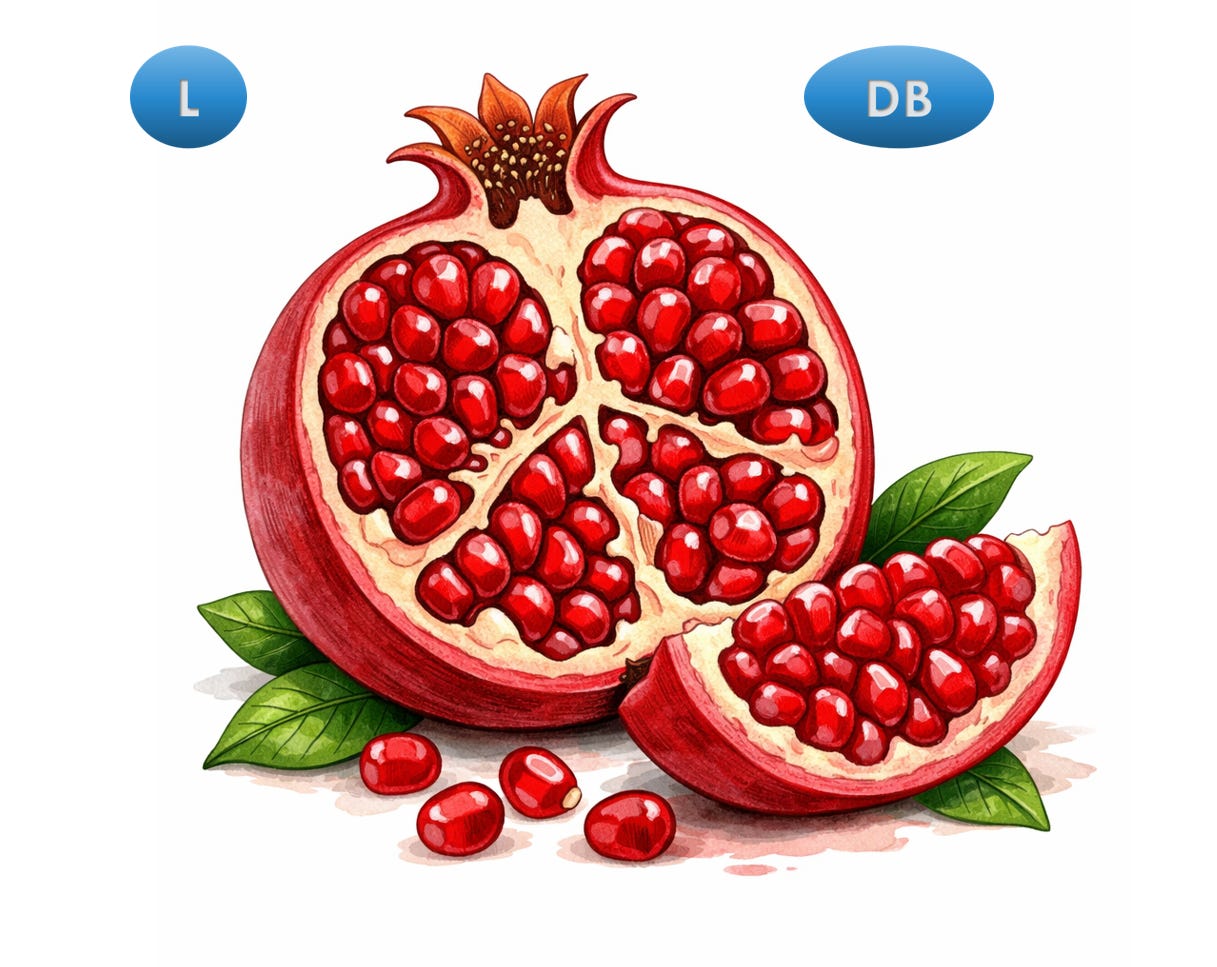
The Pomegranate Model
If you’ve ever cut open a pomegranate, you know what I mean.
The fruit is not just a single red mass. It’s designed architecture.
When I think about the New Product Development Process, I think of a pomegranate tree.
The tree holds all the fruit and supports them by the structure of its trunk and branches.
The fruit is both touchable and measurable, and provides a tangible value. The pomegranate goes through a number of different maturity stages, each with its own distinctive features.
The chambers give it structure by dividing it into separate sections.
The arils are the red, juicy beads inside the chambers — they carry the actual flavor.
Each level of NewPDP has a direct counterpart in this picture:
The pomegranate tree symbolises the programme level. It holds everything the company busies itself with — everything that makes it successful. It carries the products that delight customers, fill the cash register, and outclass the competition.
Each pomegranate is a single endeavor, which I call ITEM. This is where we measure the end results, each of which is a tangible piece of value and a significant contribution to the company’s success. The maturity stages are identified by milestones.
The chambers inside the pomegranate are the Drum Beats, which are self-contained three-month increments in which prioritised interim results are delivered.
The arils represent the individual tasks, or ToDos, within a Drum Beat. They carry the value.
This gives you a simple, manageable structure.
Each level breaks the complexity down into something you can actually handle.
Deliverables: What Lands in the Drum Beat — and What Deliberately Doesn’t
A defining feature of the Drum Beat is its clearly described deliverables.
Deliverables are not activities.
Not “we’re working on X.”
Deliverables are the results that have to be on the table when the Drum Beat ends.
The selection process is not random; it is a deliberate choice.
The rule is simple:
Into the Drum Beat goes
whatever produces the biggest short-term increase in value and
whatever will cause the biggest problem if it is not done right now.
That automatically means: not everything fits.
Three months are short.
There are always more wishes than capacity.
The selection’s value lies precisely in its ability to force compromise.
The question “What do we deliberately not deliver?” is just as important as “What do we commit to delivering?”, because if something doesn’t go into the Drum Beat, it won’t happen.
Everyone has to know this. No one should be waiting for it.
This isn’t politeness dressed up as honesty.
It’s protection against delay.
If even one person is waiting for an unrealistic outcome, that waiting uses up time and resources that could be used elsewhere.
For this to work, the consequences have to come on the table.
Who needs the omitted result, by when?
What happens if it doesn’t come?
How do we bridge the gap — workaround, deferral, compromise?
Only when these questions are answered is the planning robust.
Drum Beat Planning
All this selection-and-consequence work has a name: Drum Beat Planning.
It happens at the start of every Drum Beat, not as an ongoing thing but as a deliberately scheduled event when full attention and energy are dedicated to it.
In Drum Beat Planning, everyone involved participates.
Not the project manager alone.
Not an steering committee.
The team that will actually deliver.
Be careful — there’s a common trap, and it sounds like this:
“You plan; I don’t have time for that.”
I need to focus on shipping. I already know what to do — this isn’t my first project.
That is a nasty trap that leads to missing commitments and a lack of understanding.
At the end of planning stands a commitment.
Everyone involved signs off:
on the deliverables,
on what is deliberately left out,
on the delivery date.
Whoever doesn’t think along during planning will inevitably become a problem when it’s time to deliver.
What follows planning is simple.
Delivery happens.
No “let’s re-plan, something came up.”
The beat stands firm. Everyone gives their all until they reach the finish line.
Then comes the review.
Was it enough?
Did we achieve everything we set out to do?
Usually not.
Life is a squirrel that hops from branch to branch. But we know we did everything that was important and possible.
What has been achieved becomes the basis for the next Drum Beat, which is planned and executed with the same intensity and seriousness.
Conclusion
Drum Beats are about delivery!
Three-month increments break milestone deliverables into digestible bites.
Delivery demands brutal selection.
The most important first, the rest deliberately out.
The whole team plans, commits, and delivers as one team.
Is something still missing for you? Then write it in the comments, sent me a message or let’s chat on substack.

In the next article I will go into operative detail again and explain, using my database, how everything can work in very concrete terms.
Next is the ToDo level, where we'll discuss how to organize the daily activities that actually get the work done.
If you dont want to miss it, please subscribe to the newsletter.
If you found this article helpful, don’t forget to share it with others who might enjoy it too!
And if you like my newsletter, I would be grateful if you would share it as well.